Roofing in Brick, NJ, Traced From the Attic Up

Leak repairs, full replacements and storm work for shore houses, ranches and raised homes, with every line of the scope written out before work begins.

Brick Roofing has spent 20+ years on roofing in Brick, NJ, repairing leaks, replacing worn-out shingle roofs, fixing storm damage, installing gutters and skylights, and working on flat, metal and commercial roofs across Ocean and Monmouth counties. Every job starts with an inspection that covers both the roof surface and the attic beneath it.

Most calls we get begin with water: a stain on a bedroom ceiling, a drip near a chimney, a damp patch in the attic after a nor’easter. We trace that water to where it actually enters before anything is priced, and we tell you plainly whether the roof can be repaired before a replacement is ever mentioned.

When a roof does need replacing, the estimate lists tear-off, decking, underlayment, flashing, ventilation and gutters as separate lines. That way you can put our number next to anyone else’s and compare the work item by item instead of comparing two totals.

Get Your Free Quote

Fast response • No obligation

So we can reach you about your request.

So we can send you a confirmation after you submit this inquiry form.

  • 20+ Years in Roofing
  • Attic and Roof Leak Checks
  • Line-Item Written Scopes

What we do

Our Services

Roof repair and replacement for Brick, NJ and the Jersey Shore

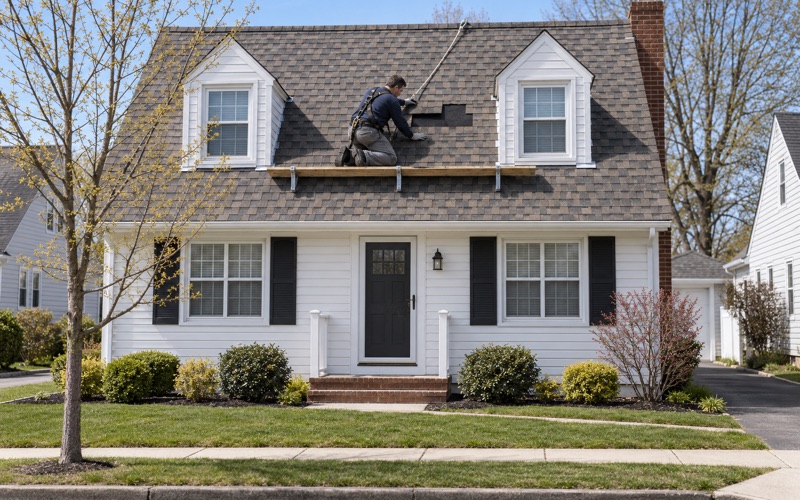
A roofer sliding a replacement shingle into place on the front slope of a Brick Township cape.

Roof Repair

Shingle, flashing and flat-roof repairs in Brick, NJ, with a straight answer on whether the roof can be fixed before anyone mentions replacing it.

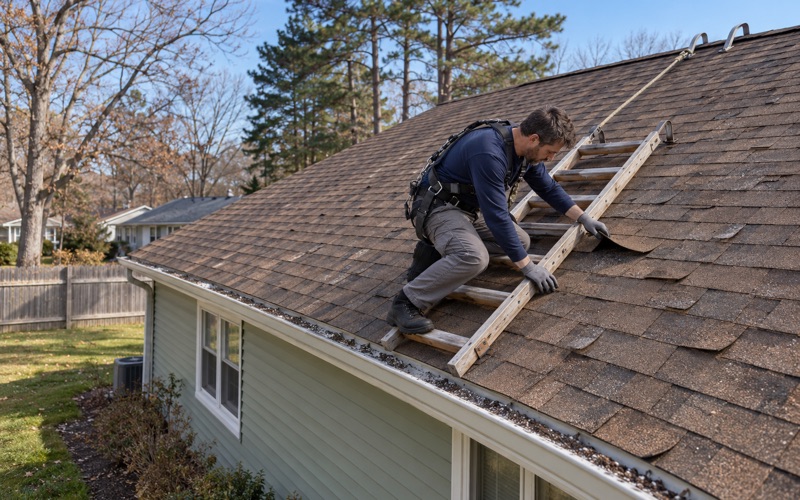
A roofer lifting the curled corner of an aging shingle to inspect the roof of a Brick Township ranch.

Roof Inspection

Attic-and-roof inspections in Brick, NJ with dated photographs and a written report, for buyers, sellers, storm checks and seasonal homes.

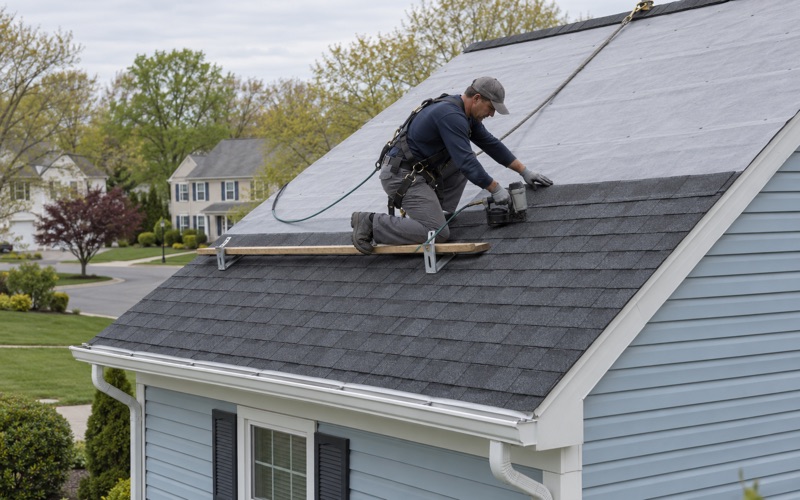
New architectural shingles nailed over fresh underlayment during a full roof replacement on a Brick Township colonial.

Roof Replacement

Full tear-off roof replacements in Brick, NJ with wind-rated shingles, salt-air fasteners and a written scope that lists every part of the job.

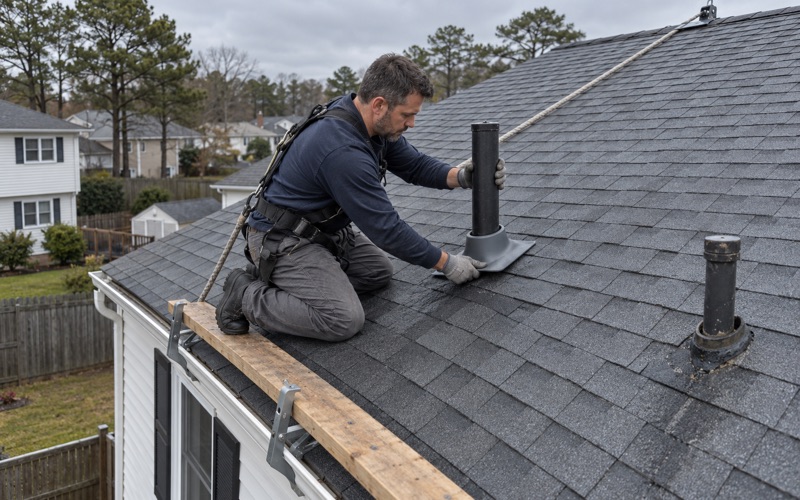
A new rubber pipe boot fitted around a plumbing vent to stop a leak on a Brick Township split-level.

Roof Leak Repair

Roof leak repair in Brick, NJ that starts in the attic, finds where the water really gets in, and fixes that spot instead of the stain.

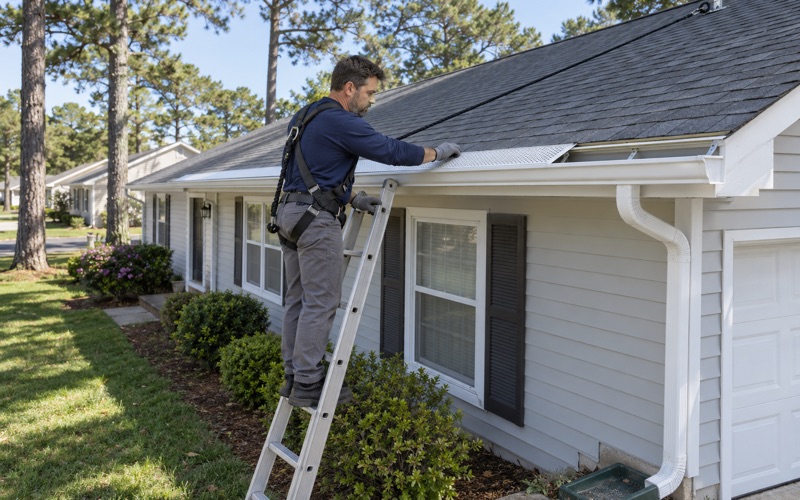
A roofer snapping a gutter guard onto a new seamless gutter on a Brick Township ranch under pitch pines.

Gutter Installation

Seamless aluminum gutters, leaders and gutter guards in Brick, NJ, installed with the roof edge in mind so water ends up away from the house.

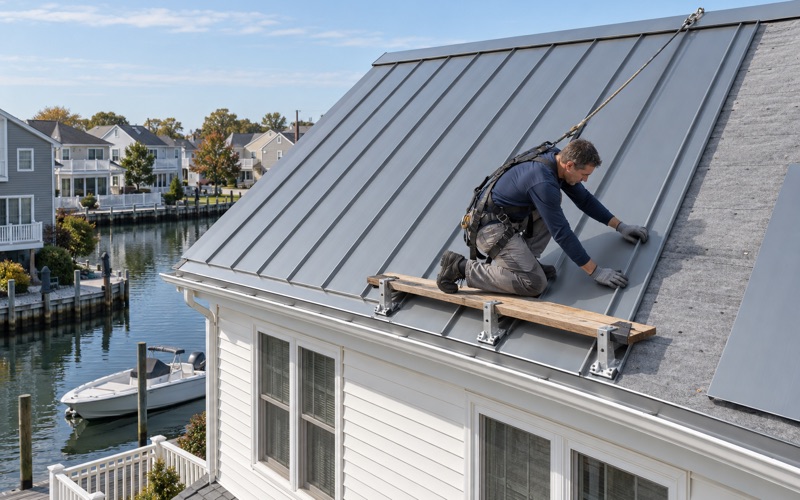
Galvalume standing-seam metal panels going onto the roof of a lagoon house in Brick Township.

Metal Roofing

Standing seam metal roofs for Brick, NJ homes and shore houses, with panel metal, finish and fasteners chosen for salt air and named in writing.

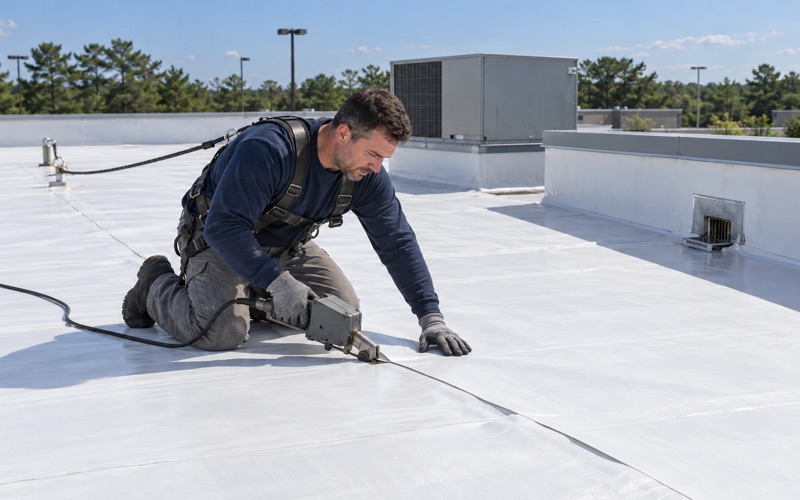
A hot-air welder sealing a membrane seam on the flat roof of a one-story retail strip in Brick Township.

Commercial Roofing

Flat and low-slope commercial roof repair and replacement in Brick, NJ, covering TPO, PVC, EPDM and modified bitumen, with itemized scopes.

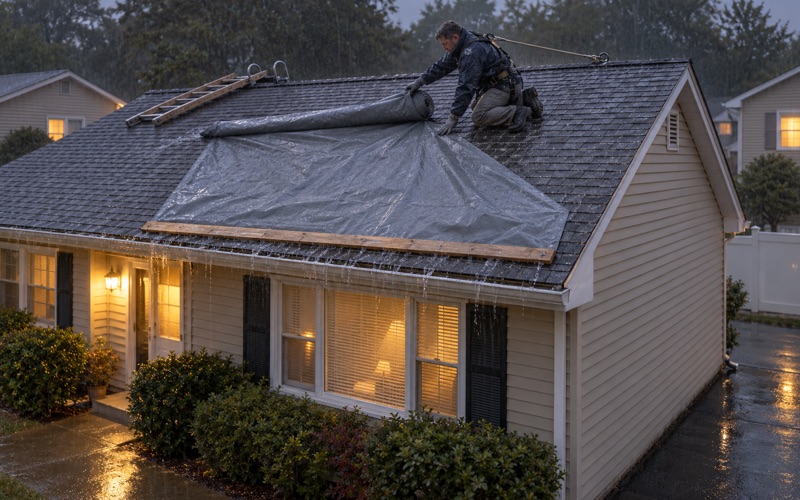
A roofer pulling a heavy tarp over the ridge of a storm-damaged ranch in Brick Township during the rain.

Emergency Roof Repair

Fast tarping and temporary repairs in Brick, NJ when a storm, a fallen tree or a sudden leak opens the roof, with photos for your records.

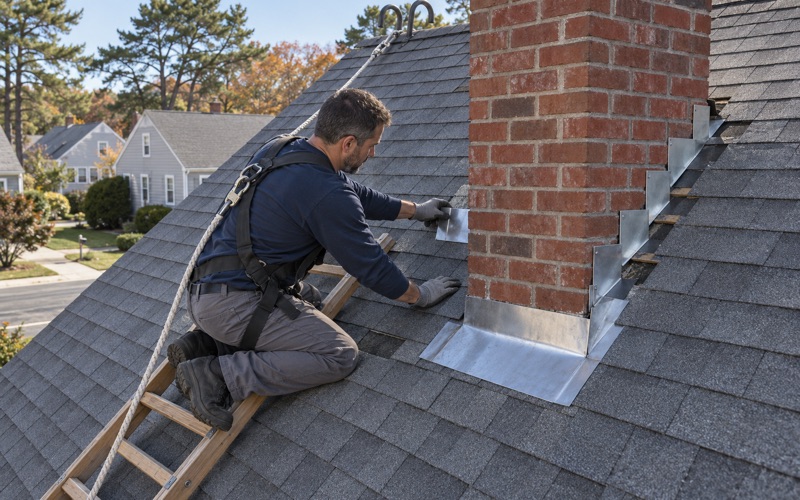
Step flashing woven into the shingles beside a brick chimney on a Brick Township cape.

Chimney Repair

Chimney flashing, crickets, crowns, caps and repointing in Brick, NJ, to stop the leaks that start where the roof meets the masonry.

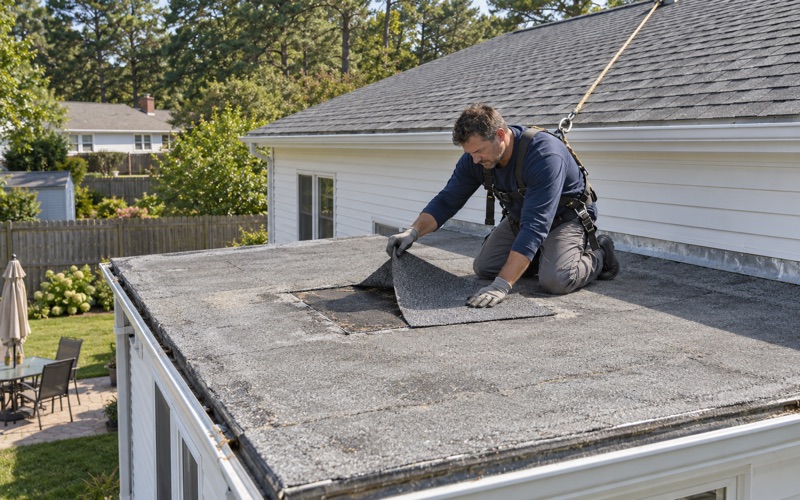
A modified bitumen patch pressed over a blister on the flat roof of a rear addition in Brick Township.

Flat Roof Repair

Repairs to flat and low-slope roofs in Brick, NJ, from porch roofs and additions to commercial buildings, matched to the membrane on the roof.

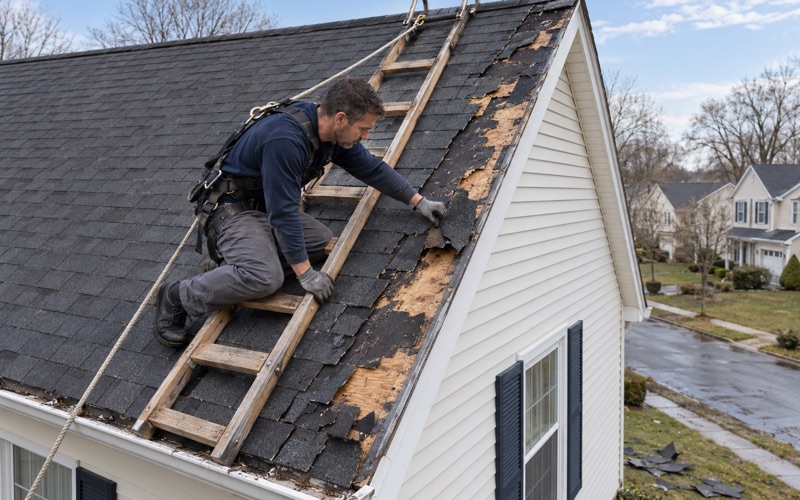
A roofer clearing wind-torn shingles from the rake edge of a Brick Township house after a nor'easter.

Storm Damage Roof Repair

Storm damage roof repair in Brick, NJ, with photographed damage reports for your claim and repairs rated for the wind at your address.

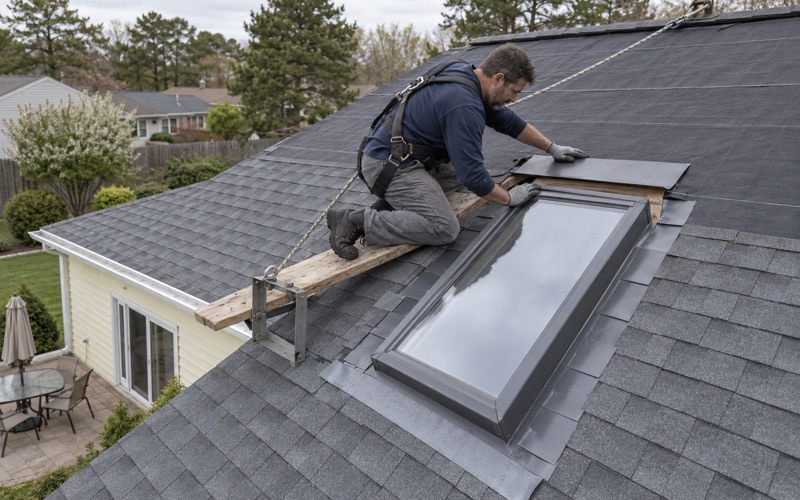
A new skylight being flashed into the rear slope of a Brick Township ranch.

Skylight Installation

New and replacement skylights in Brick, NJ, curb-mounted or deck-mounted, with step flashing and ice barrier so the opening stays watertight.

Two Decades on Shore Roofs

A roofer fitting a ridge vent along the top of a new roof on a lagoon-front ranch in Brick Township.

20+ Years of Roofing Work

Brick Roofing has worked on roofs in and around Brick Township for more than 20 years. That time covers the ordinary work of leaks and worn shingles as well as the wind, snow and flood events this stretch of the coast has been through, and it shapes how we scope every job, from the access plan to the fasteners we choose.

Why Choose Brick Roofing

Attic-First Leak Tracing

Every leak call includes a trip into the attic as well as onto the roof, because water often travels along a rafter or the underside of the deck before it shows on a ceiling. Finding the real entry point means you pay for one fix rather than a string of patches a careless roofer places where the stain happens to be.

Repair Answer Before Replacement

No replacement gets proposed until we have told you, in plain terms, whether a repair will hold. A lifted tab or a failed pipe boot is a small job, so you hear that first rather than being steered straight to a whole new roof by a crew that only wants the big ticket.

Wind Ratings Set by Address

New Jersey ties design wind speed to the specific address through the hazard tool referenced in DCA Bulletin 19-1, and the numbers shift between a mainland lot and a barrier-island one. We look up the exact property so shingles and nailing match its rating, rather than using a single town-wide figure that can underestimate an exposed site.

Salt-Air Metal, Named in Writing

Near the ocean, Barnegat Bay and the Metedeconk and Manasquan rivers, ordinary fasteners and flashing corrode early. We choose stainless steel or hot-dipped galvanized fasteners and matching drip edge and flashing for that exposure, and the estimate names the metal, so nobody substitutes a cheaper electro-galvanized nail once the shingles cover it.

Raised-House Access Planned Ahead

Never do we discover the height of an elevated house on the morning of the job. Ladder and lift access, staging, fall protection and debris control are written into the scope after the inspection, so the work proceeds safely rather than stalling while a crew improvises around a roof that sits a full story higher than expected.

Roof Leaks and Repairs

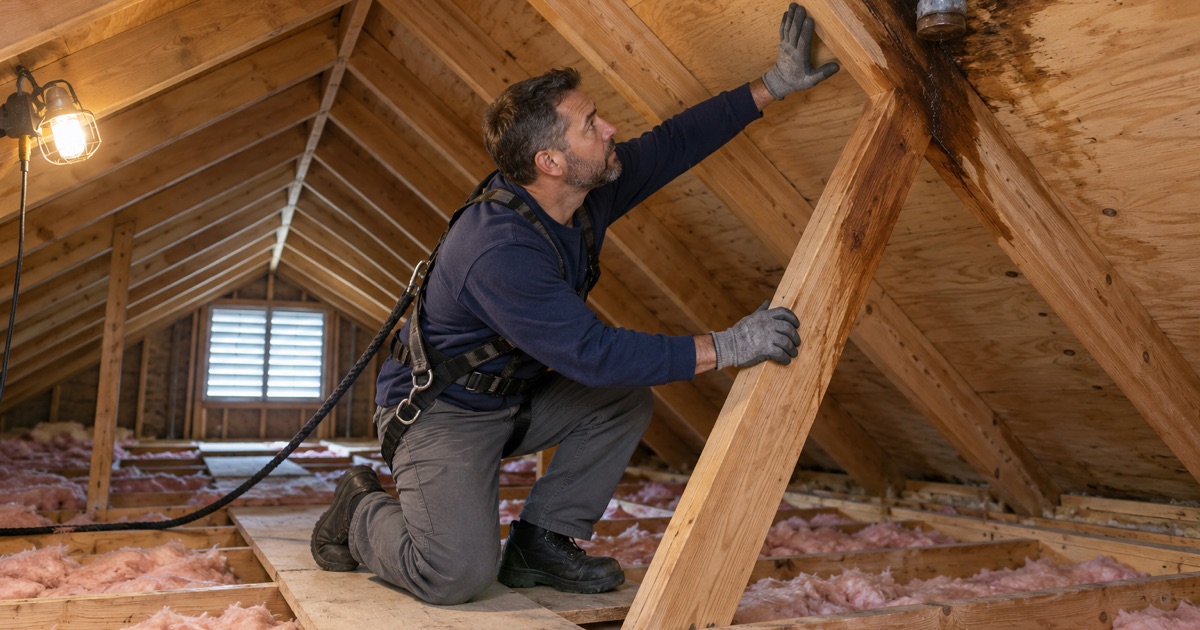
A roofer in the attic of a Brick Township house tracing a roof leak along a water-stained rafter.

Tracking a Roof Leak You Cannot Find

Some leaks are not roof leaks at all. A bathroom fan venting into the attic, a sweating supply line or winter condensation on the underside of the deck can all look like a roof failure from the ceiling below. We check the attic for those causes first, so you do not pay for roof work that leaves the real source untouched.

Ceiling Stains After a Nor’easter

A nor’easter drives rain sideways for hours, which finds gaps a straight-down shower never reaches. When a stain appears after one of these storms we look at the windward slopes, the flashing and the edges where wind-driven water gets under shingles, and we repair the entry point rather than repainting over the symptom.

Chimney, Vent Pipe and Skylight Leak Repair

Most leaks start where something passes through the roof. Cracked pipe boots, loose step flashing on a chimney and failed seals around a skylight curb are the usual suspects, and each needs its own fix. We replace the failed part with the right flashing detail instead of smearing roof cement over it and calling it repaired.

Wind-Lifted and Missing Shingles

Shore wind lifts shingle tabs, breaks the seal strip and can strip whole pieces from a ridge or rake edge. We replace missing shingles, reseal lifted ones where the shingle is still sound, and check the nailing along that edge, because a slope that lost shingles once usually has neighbors close to letting go as well.

Ice Dam Leaks Along the Eaves

When heat escapes into the attic, snow melts on the upper roof and refreezes at the cold eave, backing water under the shingles. Brick has seen heavy snow, including a 30-inch measurement in the December 2010 storm, so we look at insulation and ventilation along with the roof and use ASTM D1970 self-adhering ice and water barrier at the eaves on any replacement.

Leaks Behind the Gutter and Fascia

Water that shows up on a soffit or the top of a wall is often running behind the gutter, between the back of the gutter and the fascia board. A missing or short drip edge is the common cause. We fix the edge detail and the gutter fit together, because rehanging the gutter alone leaves the gap that let the water in.

Emergency Roof Tarping

When a storm or a fallen limb opens the roof, the first job is keeping more water out. We tarp and secure the damaged area, photograph it before and after, and keep the receipts and photos together so they can go straight into your insurance claim. The permanent repair is then scoped once the weather clears.

Repairing Versus Replacing a Leaking Roof

One leak on a roof with sound shingles is a repair. Leaks in several places, curling or granule-bare shingles across whole slopes, or soft decking are signs the roof has reached the end of its life. We show you what we found, with photographs, and give a straight recommendation either way.

Replacing a Roof on a Brick House

A new metal drip edge going on along the eave of a stripped 1970s split-level during a roof replacement in Brick Township.

How a Full Tear-Off Runs

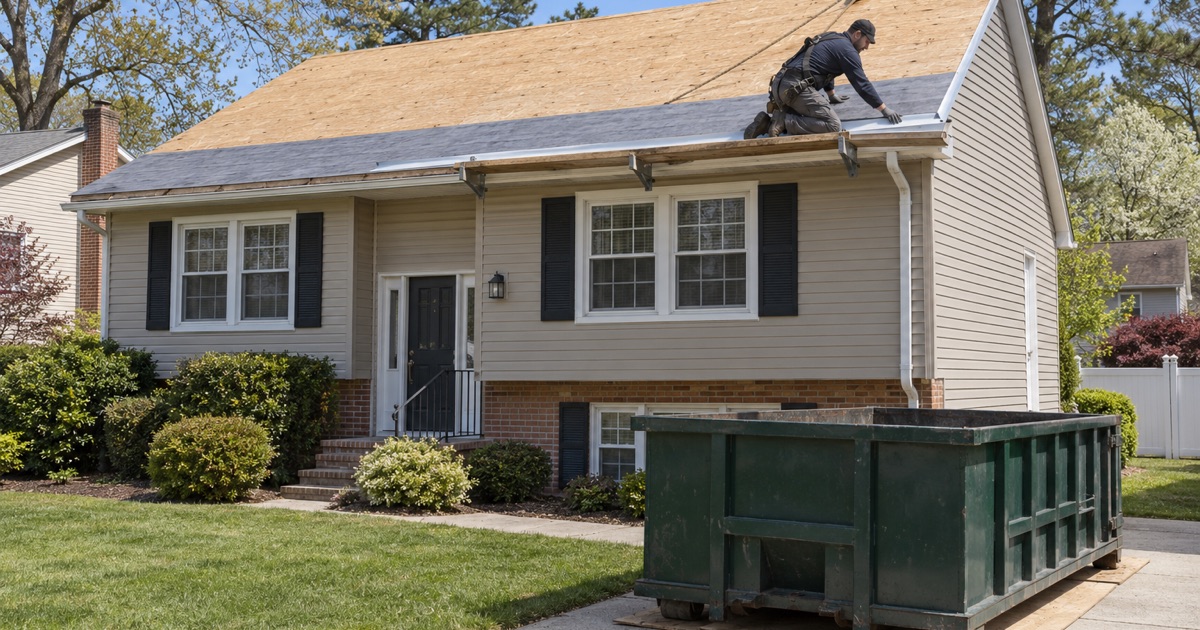
A replacement starts with the dumpster and ground protection, then the old shingles and underlayment come off down to the deck. Damaged sheathing is replaced, new underlayment, flashing and drip edge go on, and the shingles follow. The day ends with the yard, driveway and gutters cleaned and a magnet sweep for loose roofing nails.

The Two-Layer Limit in New Jersey

The state’s rehabilitation subcode, N.J.A.C. 5:23-6, requires the existing roofing to come off when it already has two or more layers, or when it is slate, wood shake or tile. That rules out a third layer on most older roofs. We count the layers at inspection so the estimate reflects a full tear-off where one is required.

Do You Need a Permit to Replace a Roof in New Jersey?

Replacing the roof covering on a detached one- or two-family house is treated as ordinary maintenance under N.J.A.C. 5:23-2.7, so it needs no construction permit. Attached homes and multi-unit buildings fall outside that rule and go to the township Building Department, and structural work changes the answer, so we confirm which applies before the job is scheduled.

Re-Roofing 1950s to 1970s Houses

Just over half of Brick’s housing was built between 1950 and 1979, and 25,886 homes are single-family detached. Ranches, Cape Cods and split-levels from those decades often have plank decking, thin ventilation and older roofs layered over one another. We plan for each of those details instead of treating every house as identical.

Architectural Shingles With Class 4 and Wind Ratings

Architectural, or laminated, shingles are the standard choice on most Brick replacements. Wind ratings under ASTM D3161 Class F and ASTM D7158 Class H, a UL 2218 Class 4 impact rating and an ASTM E108 / UL 790 Class A fire rating describe how the product performs, and we explain which ratings matter for your address.

Picking a Shingle Color for the House

A shingle color has to work with the brick, the siding and the trim for the next couple of decades. Darker blends suit red brick and older capes, while lighter grays sit well on newer siding. We bring physical samples and look at them against the house in daylight rather than choosing from a small printed swatch.

Attic Ventilation With Soffit and Ridge Vents

An attic needs air coming in low and leaving high. We balance soffit intake against ridge vent exhaust by net free area, so heat and moisture leave the attic instead of cooking the shingles in summer or condensing on the deck in winter. A ridge vent without matching intake does little, so we check both.

Replacing a Roof Under Solar Panels

Panels have to come off before the roof beneath them can be replaced, and they must go back on afterward. We plan the panel removal and reinstall into the schedule from the start and coordinate with the solar company, so the job is not held up on the day by an array nobody accounted for.

Standing Seam Metal for a Shore House

Standing seam metal roofing sheds wind-driven rain well and suits a house close to the water when the panels, clips and fasteners are chosen for salt exposure. We specify the metal and its finish in the estimate and detail the edges and penetrations so the system holds up to the same coastal conditions the house faces.

Wind, Salt Air and Flood Zones at the Shore

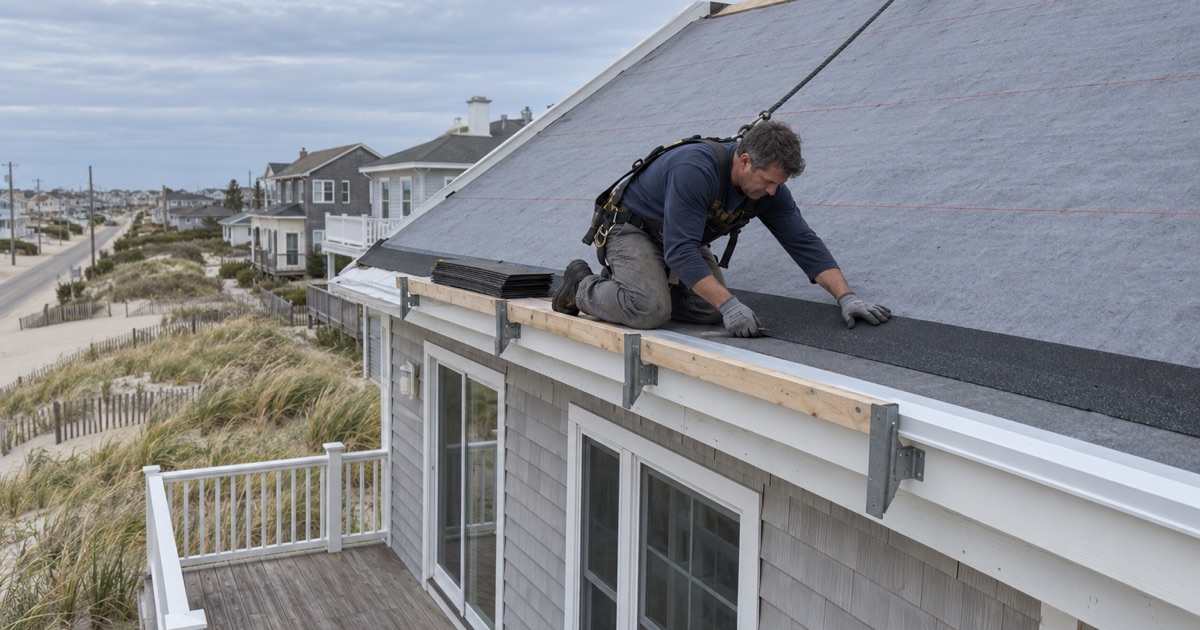
A starter strip set along the eave of a barrier-island beach house in Brick Township to hold the first shingle course against shore wind.

Looking Up the Design Wind Speed for an Address

New Jersey’s code points designers to a site-specific design wind speed, found through the ASCE 7 hazard tool that DCA Bulletin 19-1 references, rather than a single number for a town. A ZIP code lookup can underestimate an exposed site. We pull the figure for your exact address and choose shingles and fastening to suit it.

High-Wind Nailing on Shore Roofs

A wind-rated shingle only reaches its rating when it is fastened the way the manufacturer specifies for high wind, which usually means six nails per shingle in the correct nailing zone. We follow the high-wind pattern on exposed homes and place every nail where it belongs, since a nail driven above the zone holds far less than it should.

Fasteners and Flashing for Salt Air

Salt air near the ocean, Barnegat Bay and the rivers attacks ordinary steel. We use stainless steel or hot-dipped galvanized fasteners, choose flashing and drip edge to match, and on cedar shakes near salt water we use Type 316 stainless steel nails. Mixing metals that corrode against each other is avoided entirely.

Roofing a House Raised After Sandy

Hurricane Sandy damaged thousands of homes in Brick, and township reports describe more than 1,000 residents applying for RREM elevation and rebuilding funds. A house raised a full story needs lift access, staging and fall protection at six feet and above under OSHA’s residential roofing rule. We put all of that in the scope before the crew arrives.

Flood Zones VE and AE and the 50 Percent Rule

In FEMA flood zones VE and AE, repairs after storm damage can trigger the substantial improvement rule once their cost reaches 50 percent of the building’s market value, which can bring elevation and other requirements with it. Flood-zone questions go to township Engineering. We give you an itemized repair scope so that figure can be calculated accurately.

Barrier-Island Homes Along Route 35

Brick’s barrier-island section took the heaviest Sandy losses in the township, with about 100 of the homes the mayor said could not be reoccupied located there. Houses on that strip sit fully exposed to ocean wind and salt spray, so we treat their fasteners, flashing and wind-rated shingle choices as a different specification from a mainland roof.

Lagoon Homes on Barnegat Bay and the Metedeconk

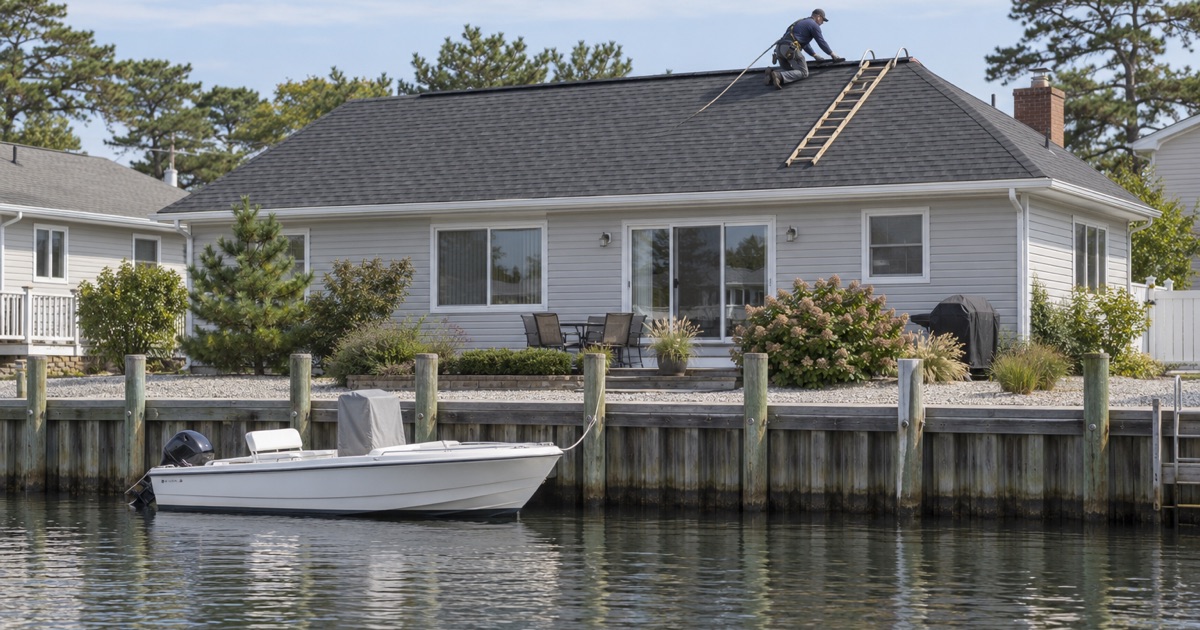
Lagoon neighborhoods along Barnegat Bay and the Metedeconk River combine salt or brackish water, open wind across the water and, often, elevated houses. Reedy Creek alone holds many lagoons. We plan access from the street side, choose corrosion-resistant metals and keep debris out of the water during tear-off.

Checking a Second Home After a Winter Storm

About 1,877 Brick homes are held for seasonal or occasional use, and their owners are often hours away when a storm passes. We can inspect and photograph the roof while you are gone and send the report the same day, so a lifted shingle is caught before it becomes a ceiling stain nobody sees until spring.

Storms, Insurance, Associations and Paying for a Roof

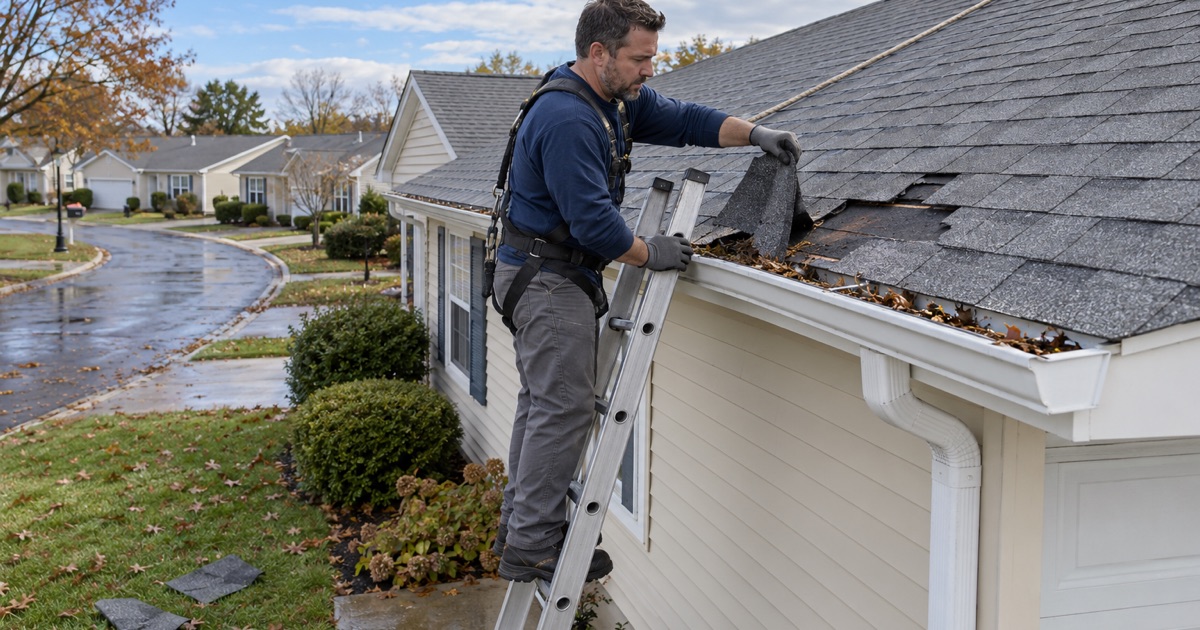
A roofer pulling a wind-torn shingle out of the gutter of a one-story house in a Brick Township adult community after a storm.

First Steps After Storm Damage

After a storm, photograph the damage from the ground and inside the house before anything is moved, stop further water with a temporary repair, and keep every receipt. We document the roof with dated photographs and a written description, which gives you the record an insurer will ask for when the claim is filed.

How a New Jersey Roof Claim Works

A homeowners claim starts with notice to your insurer, followed by an adjuster’s inspection and a settlement offer based on the policy. We write up the damage for your own claim and will meet the adjuster on site when you ask, so the adjuster sees the same damage we documented rather than a summary relayed over the phone.

Hurricane Deductibles and When They Apply

New Jersey allows insurers to file a hurricane deductible, mandatory up to 5 percent and optional up to 10 percent, but it applies only to a named hurricane with 74 mph sustained winds measured in New Jersey by the National Weather Service. Irene did not qualify under DOBI Bulletin 11-16, and Sandy deductibles were barred.

Wear and Tear Versus Storm Damage

Policies cover sudden damage from wind and falling objects, not the slow aging of a roof, and many denied claims come down to that difference. Our report separates storm damage, such as creased or missing shingles, from existing wear, so the claim you file describes what the storm actually did.

Public Adjusters in New Jersey

Under the Public Adjusters’ Licensing Act, N.J.S.A. 17:22B, anyone paid to act for a homeowner in negotiating a property claim must hold a public adjuster license from the Department of Banking and Insurance. A roofer cannot take on that role. We provide the documentation and attend the inspection, while the negotiation stays with you or the adjuster you hire.

Adult Community Roofs: Owner or Association?

In adult communities and associations, the master deed or bylaws decide whether the roof belongs to the owner or the association. We read those documents first, before quoting, so you know whether the decision and the bill are yours or the board’s, and we do not start work on a roof the association is responsible for.

Association Reserve Studies and Roof Schedules

New Jersey’s capital reserve study law, P.L.2023, c.214 at N.J.S.A. 45:22A-44.2, requires planned real estate development associations to study and fund the capital assets they maintain, which can include roofs. A board planning a phased replacement can use our line-item scopes to compare bids and set the schedule.

Sales Tax on a New Roof Versus a Repair

In New Jersey, a full new roof is generally a capital improvement documented with Form ST-8, the Certificate of Exempt Capital Improvement, while a repair is handled differently for sales tax. We tell you which category your job falls in and supply the paperwork that goes with it.

What Moves the Price of a Roof Replacement

Roof size and pitch, the number of layers coming off, the amount of decking that needs replacing, flashing at chimneys and walls, ventilation, access on a raised house and the shingle line all move the price. Our estimate prices each of those as its own line, so you can see exactly where the money goes.

Areas We Serve

Brick Roofing provides roofing throughout the greater Brick area, with the same crews and the same standards on every job.

Good to know

Frequently Asked Questions

How long does a typical roof replacement take on a Brick house?

Most single-family tear-offs on a ranch, cape or split-level run a day or two once materials are on site. Larger roofs, steep pitches, raised houses and any decking replacement add time, and we name the expected number of working days in the written scope rather than promising a date we cannot keep.

Do you give a price over the phone?

No. A roof price depends on the number of existing layers, the decking under them, the flashing details, the ventilation and access, and none of that is visible from a phone call. We look at the roof and the attic first, then put every item on its own line so the number can be checked.

Which shingle brands do you install?

We regularly work with architectural shingle lines such as GAF Timberline HDZ, Owens Corning Duration and CertainTeed Landmark. The brand matters less than the wind rating, the nailing pattern and the underlayment chosen for the address, so we explain those choices in the estimate rather than selling a name.

Are you registered to do home improvement work in New Jersey?

New Jersey requires home improvement contractors to register under the Contractors' Business Registration Act, N.J.S.A. 56:8-136 and the sections that follow it. Ask any roofer you are considering for their registration and check it with the state before signing; our contracts are written to the same consumer fraud rules that act sits in.

Can I cancel a roofing contract after I sign it?

Yes. On a home improvement contract over $500, New Jersey gives the homeowner three business days to cancel under N.J.S.A. 56:8-151. The notice explaining that right is printed in every contract we write, not tucked into a separate sheet.

What happens if you find rotten decking during a tear-off?

We photograph it and show it to you before any sheet is replaced. The per-sheet price for new decking is set in the contract before the job starts, so the surprise is limited to how many sheets, never to what each one costs.

Do you work on flat and low-slope roofs as well as shingles?

Yes. Porch roofs, additions, dormers and commercial buildings often carry torch-down modified bitumen, EPDM rubber, or TPO and PVC single-ply membranes. Each one is repaired differently, so we identify the membrane before quoting a patch or a replacement.

Do you install metal roofing?

We install standing seam metal roofing, which suits houses near the ocean and bay when the panels, clips and fasteners are chosen for salt exposure. We name the metal and fastener material in the estimate so you know exactly what is going on the house.

Is my new roof subject to New Jersey sales tax?

A full new roof generally qualifies as a capital improvement in New Jersey, documented with Form ST-8, the Certificate of Exempt Capital Improvement, while a repair is treated differently. We explain which category your job falls in so the paperwork matches the work.

Can you check my roof while I am away for the season?

Yes. Many owners of second homes and shore houses are not nearby after a storm. We can inspect and photograph the roof while you are away and send the report the same day, so you decide on repairs from a set of photographs rather than a guess.

Ready to Get Started?

Request a free quote today and we'll get back to you fast.