
Brick Roofing installs metal roofing in Brick, NJ, serving surrounding cities including Point Pleasant, Leisure Village East, Brielle, Point Pleasant Beach and Leisure Village. After two decades of roofing along this coast, we see metal as a strong choice for many shore homes, provided the metal, the finish and every fastener are chosen for the salt and wind the house actually faces.
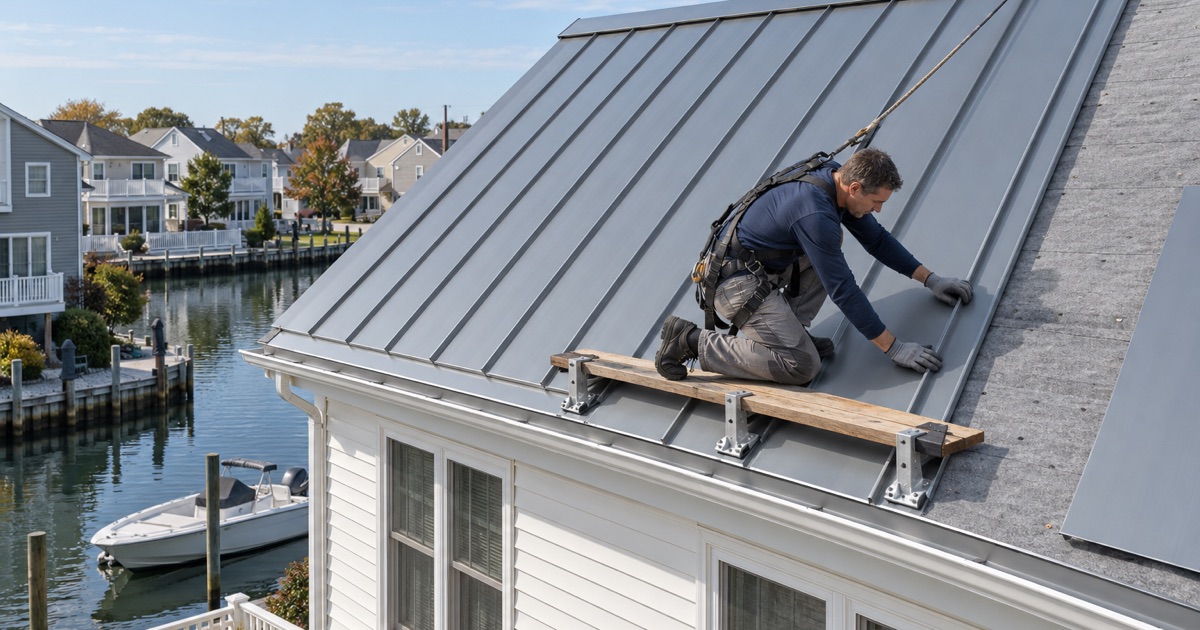
Our focus is standing seam metal roofing, where the panels run from eave to ridge and lock together at raised seams with the fasteners hidden underneath. That design sheds wind-driven rain well and leaves far fewer exposed holes than screw-down panels. It suits low ranches, capes, raised homes and modern shore houses alike, and it is often the last roof a house needs.
We also tell you plainly when metal is not the best fit. On some houses the budget is better spent on a well-installed architectural shingle roof, and we price both side by side so the choice is made on clear numbers.
Standing Seam Panels and How They Work
Concealed Clips and Fasteners
Standing seam panels are held down by clips fastened to the deck and hidden inside the seams. Because the screws are not driven through the face of the panel, there are no exposed washers to dry out and leak over the years. The clips also let the panels expand and contract with temperature changes without loosening, which keeps the roof tight through hot summers and cold winters.
Exposed-fastener panels, the ribbed sheets often seen on sheds and barns, cost less but rely on thousands of rubber washers that age in the sun and need checking and replacing over time. On a house, especially one near salt water, we recommend concealed-fastener standing seam because it removes that long-term maintenance and the leaks that come with it.
Seam Types and Wind
Panels lock together with snap-lock or mechanically seamed joints. Mechanically seamed panels, folded together on the roof with a seaming tool, hold up better to strong uplift and are worth considering on the most exposed sites. We look up the design wind speed for your exact address before choosing the panel and seam, rather than relying on a general figure for the town.
Trim, Flashing and Penetrations
The ridge, eaves, rakes, valleys and every pipe or chimney need trim and flashing made for metal. Most metal roof leaks happen at these details rather than in the panels, so we fabricate and fit them carefully, with sealants and closures matched to the panel profile and a proper underlayment beneath.
Chimneys are the most demanding detail. A wide chimney needs a cricket, or saddle, on its uphill side to split the water around it, and the metal flashing has to be set into the masonry with counter flashing rather than sealed to the face of the brick. Done properly, the chimney becomes one of the driest parts of the roof instead of the usual source of leaks.
Choosing Metal for Salt Air
Panel Metal and Finish
How close the house sits to the ocean, Barnegat Bay or the Metedeconk and Manasquan rivers affects which panel metal and paint finish will last. Homes with direct salt exposure need a different specification from homes further inland. We recommend the metal and finish for the location and name them in the estimate, so you know exactly what is going on the house.
Color also plays a part. Factory finishes come in a wide range of shades, from charcoal and dark bronze to lighter grays and coastal tones, and lighter colors reflect more summer heat. We bring panel samples to the house so you can judge the color against the siding, trim and surroundings in daylight before anything is ordered.
Matching Fasteners and Avoiding Reactions
When two different metals touch in a wet, salty environment, one corrodes faster than it otherwise would. We match clips, fasteners, flashing and gutters to the panel metal, using stainless steel or hot-dipped galvanized hardware where appropriate, so no part of the roof wears out years ahead of the rest.
Rinsing and Upkeep
A metal roof needs little maintenance, but on homes near salt water an occasional rinse of protected areas, such as under overhangs where rain does not reach, helps remove salt buildup. We explain what upkeep the chosen finish needs and what to watch for during an annual look at the roof.
Installing a Metal Roof
Tear-Off and Decking
We strip the old roofing to the deck, which New Jersey requires when two or more layers are already in place. Any rotten or damaged sheathing is photographed and shown to you before it is replaced at the per-sheet price written into the contract. A flat, solid deck matters with metal, since unevenness shows in the panels.
At the end of each work day the crew cleans the yard, driveway and gutters and runs a magnet over the ground to pick up loose nails and screws. Metal installation also produces small cut-offs and filings, which we collect so they do not stain the new finish or end up in the lawn.
Underlayment Under Metal
Metal panels need underlayment that tolerates the higher temperatures reached under a metal roof in summer. We use a high-temperature synthetic underlayment over the deck and ASTM D1970 self-adhering ice and water barrier along the eaves, in valleys and around penetrations, which protects the house even if wind drives water past a trim joint.
Raised Houses and Access
Many homes near the water now stand a story higher after being raised following Sandy. Long metal panels have to be lifted, carried and set at that height without bending. We plan the lift, staging and fall protection during the inspection and include them in the scope before work starts.
Metal Roofs and Solar
Clamp-On Solar Mounts
Standing seam roofs accept solar mounts that clamp onto the raised seams, so the array can be attached without drilling through the panels. That keeps the roof watertight and makes a metal roof a good base for panels that may stay up for decades.
Replacing a Roof Under Existing Panels
If solar panels are already on the roof, they must come off before the metal goes on. We coordinate the removal and reinstallation with the solar company and build it into the schedule from the start, so the job is not held up by an array nobody planned for.
- 20+ Years in Roofing
- Attic and Roof Leak Checks
- Line-Item Written Scopes