
Brick Roofing provides roof inspection in Brick, NJ, serving surrounding cities including Point Pleasant, Leisure Village East, Brielle, Point Pleasant Beach and Leisure Village. Our 20+ years on shore roofs mean we know what wind, salt air and winter snow do to a roof here, and where to look for the early signs.
An inspection with us covers two sides of the roof. We go up on the shingles or membrane where it is safe, and we go into the attic to look at the underside of the deck, the insulation and the framing. Problems that cannot be seen from one side are often obvious from the other.
Every finding is photographed and written up in a report you can keep, share with an insurer, a buyer or an association board, and use to plan repairs. Where something needs fixing, we tell you whether a repair will do before replacement is ever on the table.
Residential Roof Inspection
Inspections for Buyers and Sellers
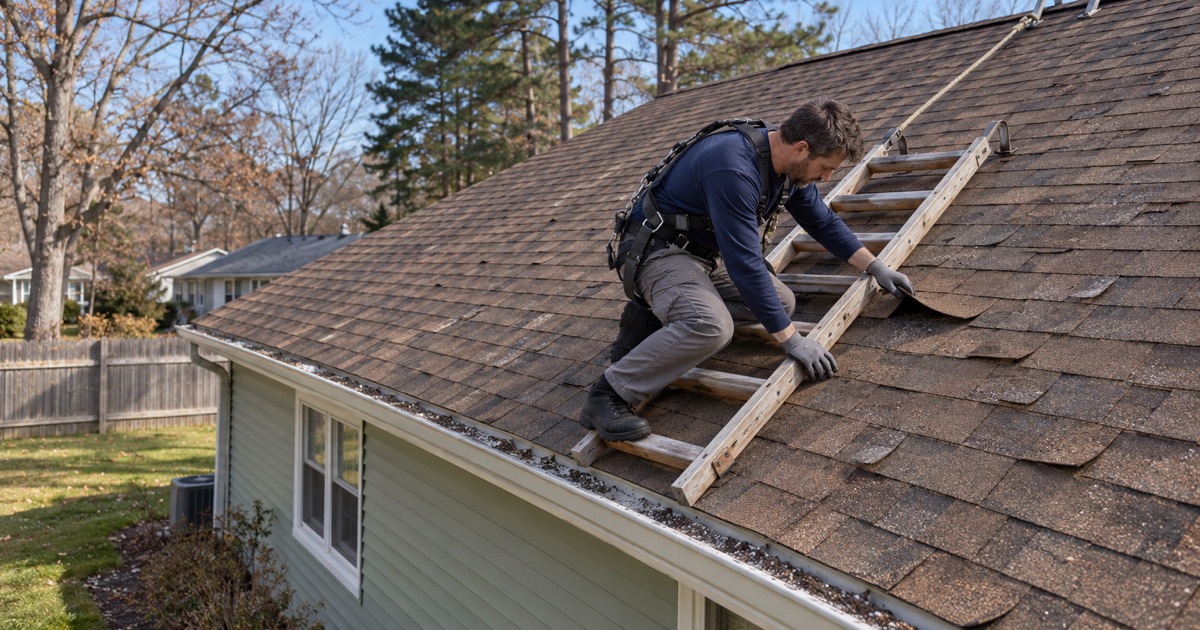
A roof is one of the largest costs a buyer can inherit, and a general home inspection often only views it from the ground. We walk the roof, count the layers, check the flashing and look at the attic, then give you a report that describes the roof’s condition and any repairs in plain terms.
Sellers use the same report to fix small problems before listing, or to answer a buyer’s questions with photographs rather than guesses. Knowing about a failed pipe boot or a loose flashing ahead of time keeps it from becoming a negotiating point late in the sale.
Annual and Pre-Season Checks
A roof that is checked once a year rarely surprises its owner. We look for lifted or cracked shingles, worn sealant, failing boots, loose flashing and clogged gutters before the fall storm season, when a small fix is still cheap and easy to schedule.
Many owners like to book the check in late summer or early fall, so any repairs are finished before nor’easter season and before leaves fill the gutters. A spring check after winter is also useful, especially where snow sat on the roof for long stretches.
Inspecting Older Brick Homes
Most of Brick’s houses were built between 1950 and 1979, and many have been re-roofed more than once. On these homes we look closely at plank decking, sagging between rafters, older flashing at chimneys and the number of layers, because New Jersey’s rehabilitation subcode requires a tear-off once a roof has two or more.
These houses were also built with far less attic ventilation and insulation than a modern roof expects. Later owners often added insulation that blocks the soffit vents, or a ridge vent with no intake to feed it. We note those mismatches, since they shorten the life of whatever roof goes on next and are cheap to correct during a replacement.
Roofs With Solar Panels
Panels shade part of the roof from view, and the shingles under them keep aging even though nobody can see them. We inspect what is visible around the array, check the mounts and flashing at each penetration, and look at the attic below for any staining near the attachment points.
If the roof has only a few years left, it is better to know before the panels need to come off for something else. Replacing the roof means removing and reinstalling the array, and planning that into one schedule costs far less than doing it twice.
Commercial Roof Inspection
Low-Slope Membrane Roofs
Commercial roofs and flat sections of houses use membranes such as torch-down modified bitumen, EPDM rubber, and TPO or PVC single-ply. We inspect seams, field areas, flashing at parapets and walls, and the curbs around rooftop equipment, where most membrane leaks begin.
We also look at drainage. Water that sits in shallow ponds for days after rain shortens a membrane’s life and finds every weak seam. The report notes where water collects and whether drains, scuppers and gutters are carrying it off.
Planning and Budgeting for Owners
Owners and property managers need to know how long a roof has left and what it will need in the meantime. Our report separates urgent repairs from routine maintenance and items to watch, so work can be planned and budgeted rather than handled as emergencies.
For tenants and landlords, the report also gives a shared, dated record of the roof’s condition. When a lease makes one party responsible for the roof, photographs from a known date settle questions about when a problem started far better than memory does.
Association and Community Roofs
In adult communities and associations, the master deed or bylaws decide whether a roof is the owner’s or the association’s responsibility. We check that first, and for boards we provide inspection reports that help with New Jersey’s capital reserve study requirements for planned real estate developments.
What We Check on Every Roof
Shingles and Nailing
We look for missing, lifted, creased, curled and granule-bare shingles, and for broken seal strips that let wind get under the tabs. Where we can, we check that nails sit in the correct zone, because shingles fastened too high can blow off in a storm even when they look sound from the ground.
Flashing, Boots and Penetrations
Chimney step and counter flashing, apron and kick-out flashing, pipe boots, exhaust caps and skylight curbs are where most leaks start. We check each for gaps, corrosion, cracked rubber and old sealant, and note any that need repair before they let water in.
Near the ocean, the bay and the rivers, we also look for corrosion on fasteners, drip edge and flashing. Salt air attacks ordinary steel early, and rust streaks or loose metal along an edge are often the first sign that the fasteners underneath are failing.
Ventilation and Attic Condition
In the attic we look for stains, damp or moldy decking, rusted nail tips, compressed or wet insulation and any daylight showing through. We check that soffit intake and ridge or box vents are balanced, because a poorly ventilated attic cooks shingles in summer and collects condensation in winter.
We also note exhaust fans that end in the attic instead of venting outside. They can soak the deck with warm, moist air every morning, which looks like a roof leak but is fixed with ductwork rather than roofing.
Gutters and Drainage
Gutters that overflow or pull away from the fascia send water down walls and into basements. We check that they are clear, sloped correctly and fastened, and that the drip edge sends water into the gutter rather than behind it.
Storm and Seasonal-Home Inspections
After a Nor’easter or High Wind
After a storm we inspect for wind damage, lifted and creased shingles, damaged flashing and impact damage from branches. Every finding is dated and photographed, which gives you the documentation an insurer will ask for. If you file a claim, we can meet your adjuster on site.
Seasonal and Second Homes
Shore houses and second homes are often empty when storms hit. We can inspect and photograph the roof while you are away and send the report the same day, so problems are caught before water damage spreads through a house nobody has opened for months.
The same visit can include a look at the gutters and the attic, so a seasonal owner gets a complete picture from one trip. If a repair is needed, we send the scope and the photographs together, and the work can be scheduled without you having to drive down to the shore to see it first.
Raised Houses Near the Water
Houses lifted after Sandy sit a full story higher, and their roofs often cannot be inspected safely from a standard ladder. We bring taller ladders or a lift and use fall protection as OSHA requires at six feet, so the roof is actually walked and checked rather than viewed from below and guessed at.
- 20+ Years in Roofing
- Attic and Roof Leak Checks
- Line-Item Written Scopes