
Brick Roofing handles roof repair in Brick, NJ, serving surrounding cities including Point Pleasant, Leisure Village East, Brielle, Point Pleasant Beach and Leisure Village. In more than 20 years of fixing shingle, flat and metal roofs along this part of the shore, we have learned that the cheapest repair is the one that finds the actual problem the first time.
That is why each repair visit covers the attic as well as the roof surface. Water rarely drips straight down from where it enters; it runs along a rafter, follows the underside of the deck or soaks insulation before it shows on a ceiling. Seeing both sides tells us where to work and what the repair really involves.
You also get a plain answer before anything is priced: whether the roof can be repaired, or whether patching it would only delay a replacement. Many calls end with a modest fix, a new pipe boot, a few shingles or a section of flashing, and we would rather tell you that than sell a roof you do not need yet.
Residential Roof Repair
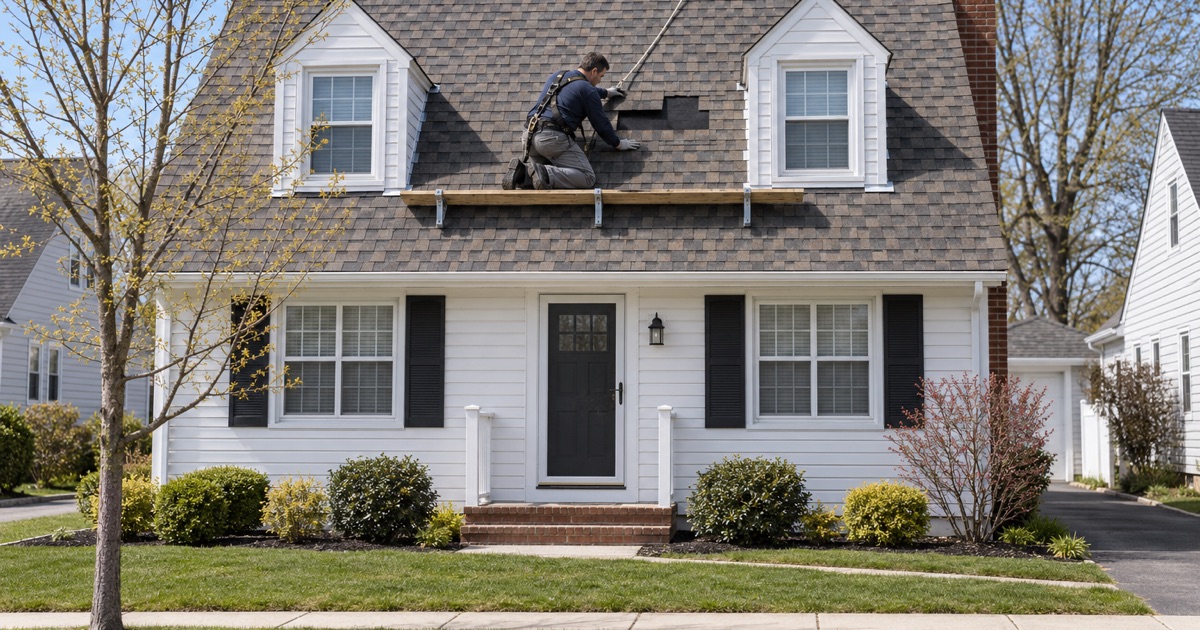
Shingle Repair After Wind
Wind lifts shingle tabs, breaks the adhesive seal and can strip pieces from the ridge and the rake edges. We replace missing shingles, reseal lifted tabs that are still sound and check the nailing along the damaged edge, since shingles next to a blow-off are often loose as well and ready to go in the next storm.
On exposed sites we fasten replacement shingles with the manufacturer’s high-wind nailing pattern, usually six nails per shingle placed in the nailing zone. A shingle nailed above that zone looks fine from the ground and holds far less than its rating says it should.
Flashing Repair at Chimneys and Walls
Chimneys and sidewalls are the most common leak points on a pitched roof. We repair or replace step flashing where the roof meets brick or siding, and add counter flashing set into a reglet cut in the masonry, so the joint sheds water instead of relying on a bead of caulk that dries out within a few seasons.
Where a wall meets the roof edge, a missing kick-out flashing sends water behind the siding and into the wall. We add that piece during the repair, along with apron flashing on the low side of a chimney, because both are cheap to install and expensive to leave out.
Pipe Boots and Roof Vents
The rubber collar around a plumbing vent cracks with sun and age long before the shingles around it fail. It is one of the most frequent sources of small, persistent leaks over bathrooms and kitchens. We replace the boot with a new one sized to the pipe, rather than smearing sealant over the split rubber.
We check the other penetrations while we are up there: bathroom and kitchen exhaust caps, attic fans and box vents. A fan duct that ends in the attic instead of outside can soak the underside of the deck every winter morning, which looks exactly like a roof leak from the bedroom below and is fixed with ductwork, not shingles.
Drip Edge and Eave Repair
A missing or short drip edge lets water curl back under the first course of shingles and run down the fascia. We install drip edge at the eaves and rakes, fix rotten fascia or the edge of the deck behind it, and check that the gutter sits properly underneath so the water ends up where it should.
In winter the eave is also where ice dams form, when heat from the house melts snow higher up and it refreezes at the cold overhang. On an eave repair we lay ASTM D1970 self-adhering ice and water barrier under the first courses, which seals around each nail and keeps backed-up meltwater out of the soffit.
Commercial and Flat Roof Repair
Membrane Repair on Low-Slope Roofs
Porch roofs, additions, dormers and many small commercial buildings carry low-slope membranes. Torch-down SBS and APP modified bitumen, EPDM rubber and TPO or PVC single-ply membranes each need a compatible patch and their own seam method. We identify the membrane before quoting, because a patch that does not bond to the original is wasted money.
Commercial Roof Leaks and Drainage
On commercial buildings most leaks trace back to seams, parapet flashing, rooftop equipment curbs or ponding where water sits after rain. We find the entry point, repair the membrane and flashing, and point out drainage problems that will keep causing leaks if only the symptom is patched.
Business owners also need to keep operating while the work happens. We schedule repairs around opening hours where possible and keep the area below the work protected and clear.
Metal Roof Repair
Standing seam and other metal roofs usually leak at fasteners, seams, ridge caps and penetrations rather than through the panels themselves. We replace backed-out or corroded fasteners, reseal seams with materials compatible with the panel finish and refit trim that has worked loose in the wind.
Where a section has corroded through, we replace the panel rather than patching over rust, which keeps spreading under any coating applied on top. Panels and fasteners near salt water are chosen for that exposure so the repair does not become the next weak spot.
Repairs That Fit Shore Conditions
Salt-Air Fasteners and Metal
Near the ocean, Barnegat Bay and the Metedeconk and Manasquan rivers, salt air corrodes ordinary steel nails and thin flashing years early. We repair with stainless steel or hot-dipped galvanized fasteners and matching metal, and we name the material on the estimate so it is clear what is going on your roof.
Mixing metals that react with each other, such as aluminum flashing against copper or bare steel, speeds up the corrosion. We match flashing and fasteners to the metal already on the roof, or replace the run so the whole detail is consistent.
Raised and Elevated Houses
Many houses near the water were raised after Sandy and now sit a full story higher. Repairs there need taller ladders or a lift, staging and fall protection, which OSHA requires at six feet for residential roofing work. We plan that access during the inspection and include it in the scope, rather than discovering it when the crew arrives.
Second Homes and Shore Houses
Owners of seasonal homes are often far away when a storm passes through. We can inspect the roof while you are gone, photograph any damage and send the report the same day. You decide on the repair from clear images instead of finding a stained ceiling when you open the house in spring.
How Our Roof Repair Visits Work
Step 1: Attic and Roof Inspection
We start inside, looking at the deck, the insulation and the framing for staining, damp or daylight, then go up on the roof to find the matching problem outside. Both are photographed so you see exactly what we saw.
Step 2: Written Repair Scope
The estimate lists each item separately: shingles, flashing, boots, decking and any access equipment. Nothing is lumped into one figure, so you can see what each part of the repair costs and compare it with any other quote.
Step 3: The Repair and Daily Cleanup
We make the repair with materials matched to the roof and the location. At the end of the day the yard, driveway and gutters are cleaned and a magnet is run over the ground to pick up stray roofing nails.
Step 4: Photos of the Finished Work
When the job is done we send photographs of the completed repair. If the problem was a leak, we suggest checking the attic after the next heavy rain and calling us straight away if anything shows.
- 20+ Years in Roofing
- Attic and Roof Leak Checks
- Line-Item Written Scopes