
Brick Roofing specializes in roof leak repair in Brick, NJ, serving surrounding cities including Point Pleasant, Leisure Village East, Brielle, Point Pleasant Beach and Leisure Village. After more than two decades of chasing leaks through shore attics, we start every leak call the same way: by going inside to see where the water is actually traveling.
A ceiling stain is a symptom, not a location. Water slips under a shingle or past a flashing, runs along the deck or a rafter, and drops onto the ceiling wherever gravity takes it. Patching the roof directly above the stain often misses the source entirely, which is why so many leaks come back after a quick fix.
Once we have found the real entry point, we tell you straight whether a repair will solve it or whether the roof is worn out. In most cases it is a single failed part, a cracked pipe boot, a loose flashing or a few lifted shingles, and the repair is priced and written up before any work starts.
Finding the Source of the Leak
Starting in the Attic
In the attic we look for wet or stained decking, darkened rafters, rusty nail tips, damp insulation and drip marks. With a flashlight on a rainy day, or with a moisture check on a dry one, we follow the trail uphill from the stain to where the water first appears on the wood.
We also look for the leaks that are not roof leaks. Bathroom and kitchen fans that end in the attic, uninsulated ducts and warm air leaking from the house all produce condensation on the cold underside of the deck in winter. Fixing that is a ventilation job, and replacing shingles would not help.
Matching It on the Roof
With the attic findings in hand we go up and look at the roof directly above the entry point and uphill from it. We check shingles for lifting, cracking and missing pieces, and look closely at flashing, boots, vents and seams in the area. Inside and outside findings are photographed together so you can see the connection.
Leaks That Only Show in Certain Weather
Some leaks appear only during a nor’easter, when rain is driven sideways for hours into joints that ordinary rain never reaches. Others show up only in winter, from ice dams or condensation. Telling us when the leak appears, and from which direction the wind was blowing, narrows the search considerably.
Where a leak is hard to pin down, we may water-test a section of roof, running a hose over one area at a time while someone watches in the attic. It is slow, careful work, but it finds leaks that cannot be found any other way.
Where Roof Leaks Start
Chimney Flashing Leaks
Chimneys are one of the most common leak sources on older homes. Step flashing along the sides, counter flashing set into the brick and apron flashing at the front can all fail as mortar cracks and sealant dries out. We replace the flashing properly, cutting counter flashing into a reglet in the masonry rather than relying on caulk.
On wide chimneys, water can pool on the uphill side. A chimney cricket, or saddle, built behind the chimney diverts water around it. Where a chimney crown or cap is cracked, water can also enter from the top, and we repair the crown and cap so the masonry stops soaking up rain.
Pipe Boots and Vents
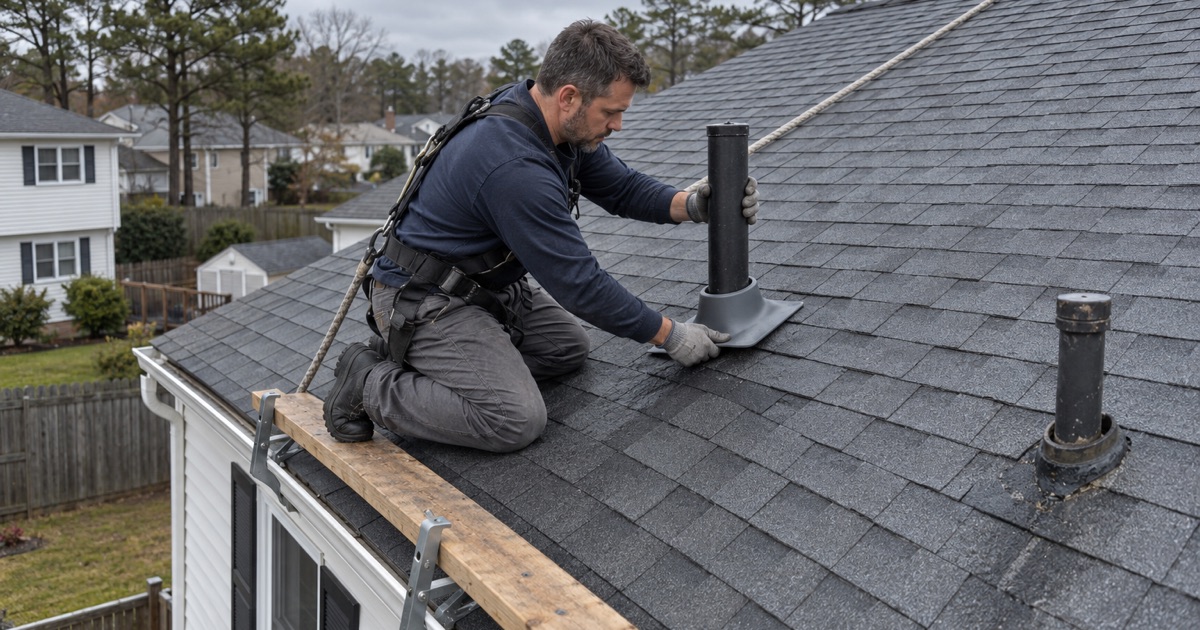
The rubber seal around plumbing vent pipes cracks and shrinks with sun and age, often well before the shingles around it are worn. It is a common cause of small, recurring leaks over bathrooms and kitchens. We replace the boot with one sized to the pipe and check exhaust caps and box vents nearby for the same kind of wear.
Skylight Leaks
Skylight leaks usually come from the flashing around the curb, not the glass. Older skylights installed without proper step flashing, or set in sealant alone, start leaking as the sealant ages. We reflash the skylight correctly, or replace it with a curb-mounted or deck-mounted unit if the skylight itself has failed.
Not every wet skylight is leaking, either. Condensation forms on the inside of the glass in cold weather and runs down the shaft, especially over bathrooms and kitchens. We check whether the water is coming from outside or forming inside before recommending any work on the skylight.
Valleys and Wall Joints
Valleys carry more water than any other part of the roof, and worn or poorly cut shingles there let it under. Where a roof meets a sidewall, missing step flashing or a missing kick-out at the bottom sends water into the wall instead of the gutter. We rebuild those details with ice and water barrier underneath.
Gutters play a part here too. A gutter packed with leaves overflows back toward the house, and without a proper drip edge the water runs behind the gutter onto the fascia and into the soffit. What looks like a roof leak at the top of a wall is often an edge and gutter problem, and we fix the two together.
Wind-Damaged Shingles
Shore wind lifts shingles, breaks their seal strips and tears off tabs and ridge caps. Even a shingle that drops back into place after being lifted can leave a broken seal and a nail hole open to wind-driven rain. We replace damaged shingles, reseal the ones still sound and check the fastening along the edge.
Winter Leaks and Ice Dams
How Ice Dams Form
When heat escapes into the attic, snow on the upper roof melts and runs down to the cold eave, where it refreezes into a ridge of ice. Water then backs up behind it and under the shingles. Brick gets heavy snow at times, including a 30-inch measurement in the December 2010 storm, and ice dams follow those storms.
Fixing the Cause, Not Just the Leak
We repair the damaged roofing and install ASTM D1970 self-adhering ice and water barrier along the eaves where we are re-roofing. More importantly, we look at the attic insulation and ventilation that allowed the heat loss in the first place, because fixing those is what stops the next ice dam from forming.
Urgent Leaks and Storm Damage
Emergency Tarping
When a storm or a fallen branch has opened the roof, the first step is keeping more water out. We tarp and secure the area, photographing it before and after, so the house is protected until a permanent repair can be made in better weather.
Inside, it helps to move furniture away from the drip, catch the water and photograph the damage before cleaning up. Keep receipts for anything you buy or anyone you hire to limit the damage, since those records support a claim if the leak came from a storm.
Documenting the Leak for Insurance
If the leak was caused by a storm, we photograph the damage and write up the cause and the repair, which you can include with your own claim. When asked, we will meet the insurance adjuster at the house, so they see the same damage we found rather than a description passed along by phone.
Leaks at Seasonal Homes
A leak in a house nobody is living in can run for weeks before anyone notices. For owners of second homes and shore houses, we can inspect and photograph the roof while you are away and send the report the same day, so a small leak is repaired before it soaks a ceiling and the insulation above it.
- 20+ Years in Roofing
- Attic and Roof Leak Checks
- Line-Item Written Scopes